
Mobile · Culture
İzmir Tarih Application
The Izmir History mobile application, implemented within the scope of the Izmir…
View
With 12+ years of experience in healthcare technologies Schedule a demo with us
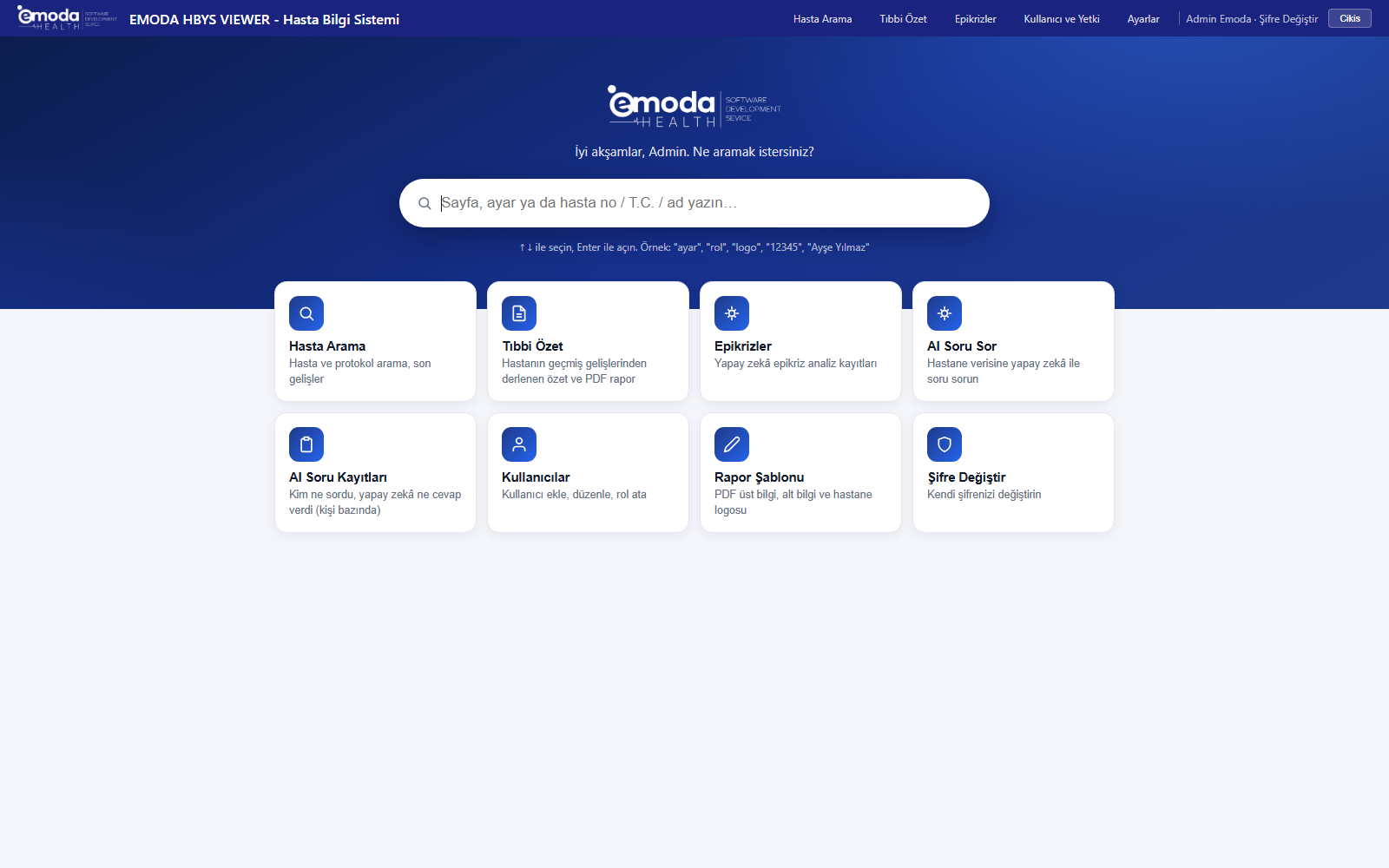
Emoda Viewer is an independent viewing and analysis layer built on top of the hospital information system (HIS). It never connects to the HIS database directly; data is read through the HIS vendor's service layer, read-only, adding no load to the existing system. Physicians, nurses, quality and finance teams reach patient search (national ID, name, protocol), visits, diagnoses, test results, PACS image links, discharge summaries and billing data from one modern web interface without navigating HIS screens.
A single search box on the home page finds patients, protocols, pages and settings together. The Medical Summary module compiles a patient's last five years with AI: chronic conditions, diagnoses, medications, allergies, admissions, significant and abnormal lab results, radiology and pathology reports, surgeries and latest vitals on one page, optionally shared as a password-protected PDF or e-mailed to the patient. Test-order indications are included, so the physician sees what was ordered and why.
The discharge-summary analysis is a pre-billing control layer that audits an inpatient discharge summary before it is invoiced to the social security institution. All data tied to the protocol — diagnoses, procedures, medications, laboratory, radiology (X-ray, US, CT, MRI, PET), ECG/echo, pathology findings, consultations and the operative note — is compiled and sent to the AI. Patient identity, physician names and names in free text are masked on the server before sending.
Business rules are checked automatically before submission: whether the patient is covered by social security or complementary insurance, whether the protocol has already been invoiced (invoiced records can only be submitted by authorised users), tests whose results are not yet available, and protocols linked through the Medula follow-up chain (first visit with day-case/inpatient follow-up) are shown to the user; linked follow-ups are evaluated at the same time as separate analyses.
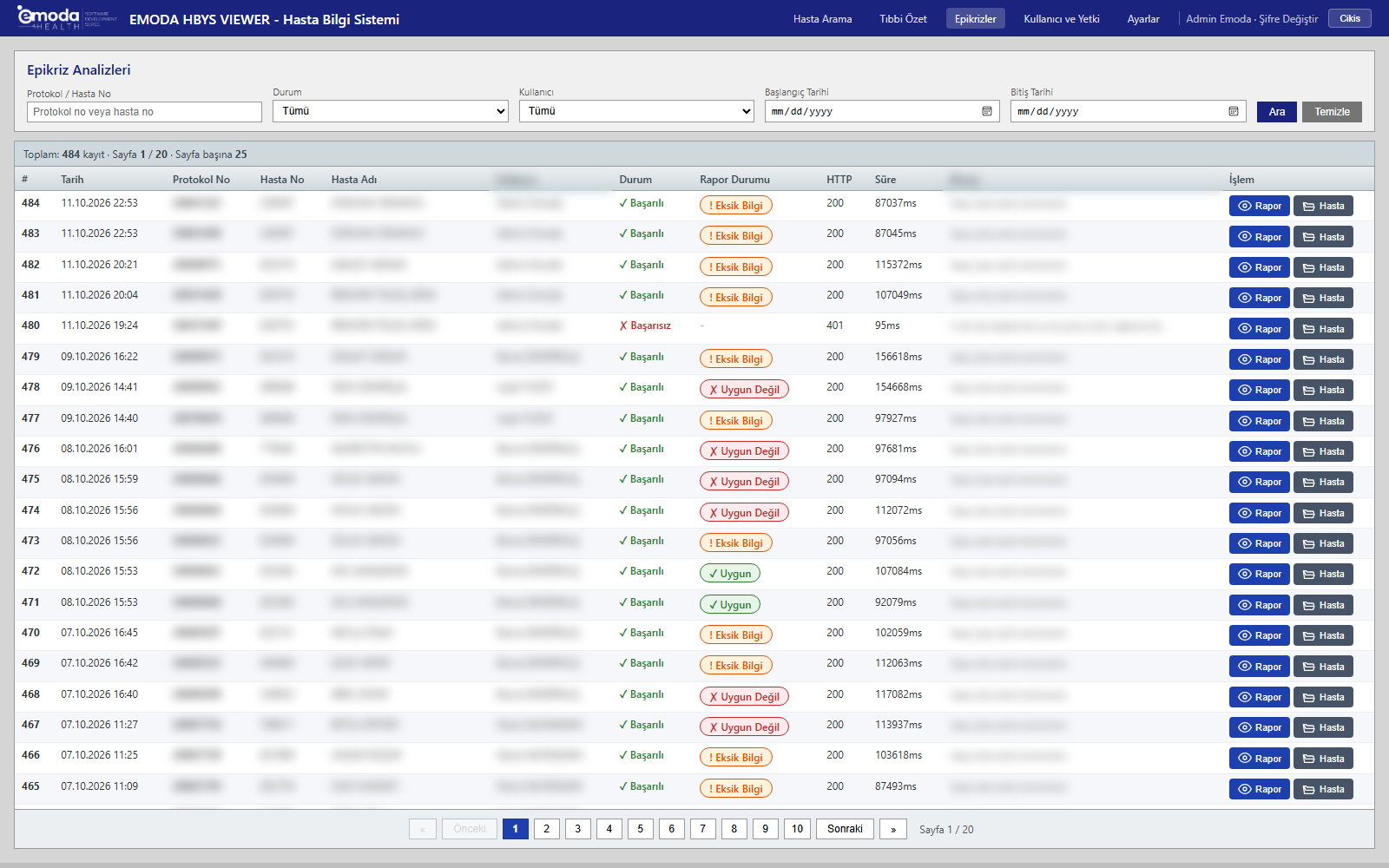
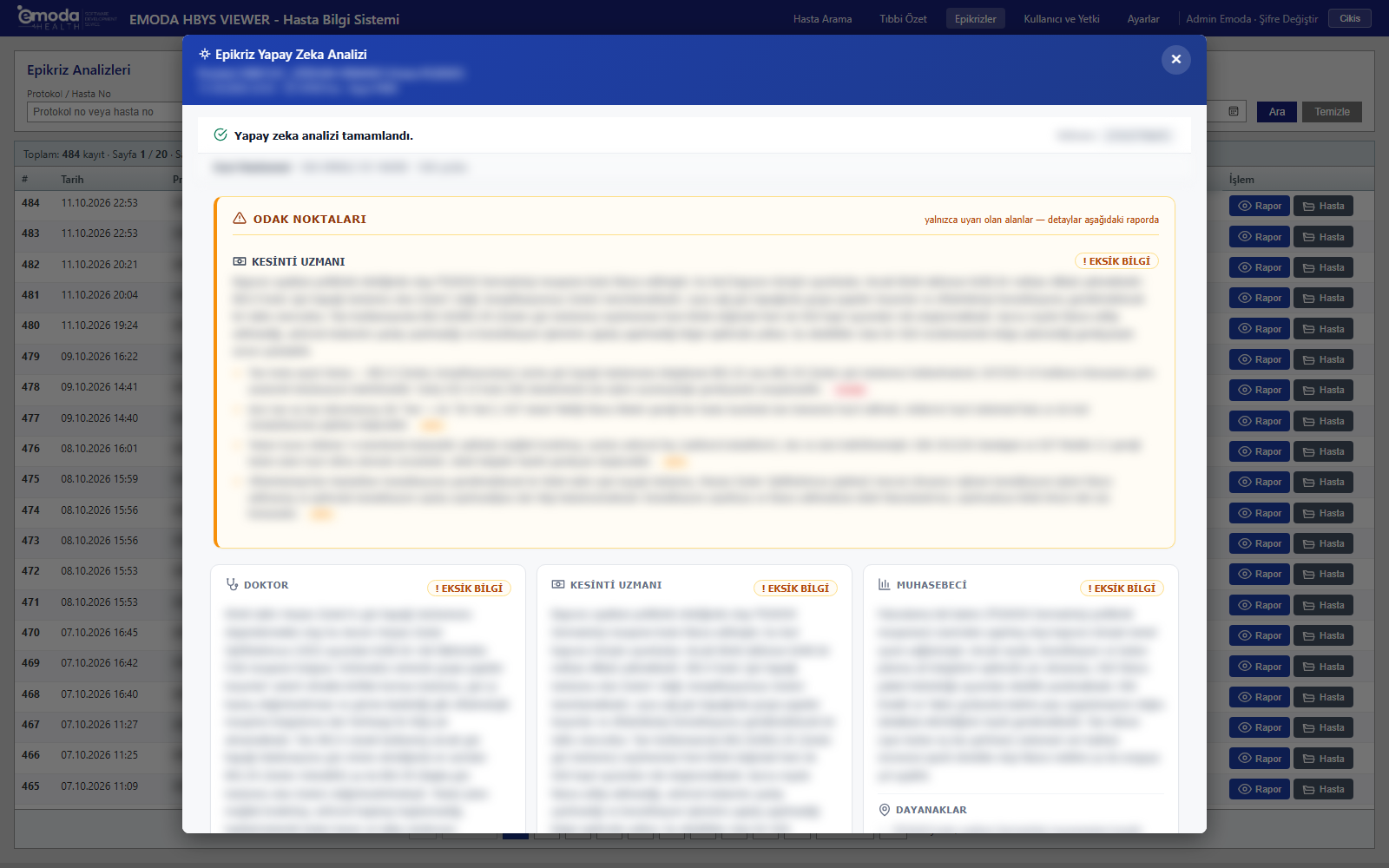
The analysis is performed from three expert perspectives. Physician: clinical consistency, diagnosis–treatment alignment, missing clinical justification. Deduction Specialist: compliance with SUT rules, items at risk of deduction and the supporting rule numbers. Accountant: billing and coding gaps. For each role a status badge (Compliant / Missing Information / Non-compliant), a reasoned opinion, a list of supporting evidence and a risk level are reported. The "Focus Points" section at the top collects only the areas with warnings; the "Missing Information" list enumerates items to complete in the summary; institution-defined custom questions (e.g. whether the admission indication is justified) are answered individually. The "Structured Extraction" section lists what the AI identified in the summary: diagnoses (ICD-10), procedures (SUT code), medications (dose, frequency), lab values and treatment line.
Every analysis is recorded on the Discharge Summaries screen: filter by protocol or patient number, success status, report status (Compliant / Missing Information / Non-compliant), submitting user and date range; jump to the report or the patient's full record in one click. If a completed analysis already exists for the protocol it is returned without a new charge; a forced re-analysis is available. Analyses run in the background with live progress on screen. The goal is to catch gaps before billing, reduce reimbursement deductions and standardise internal audit.
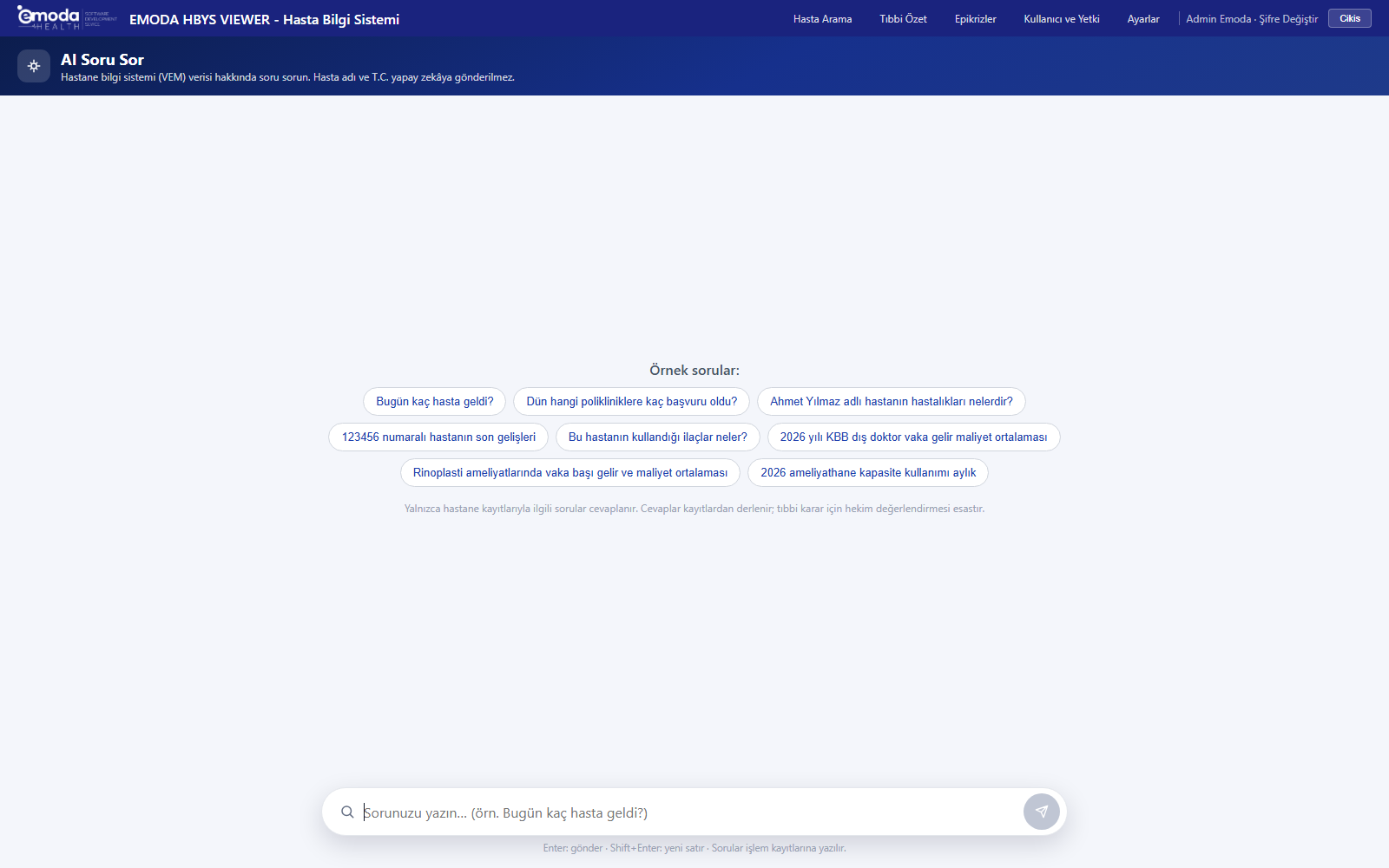
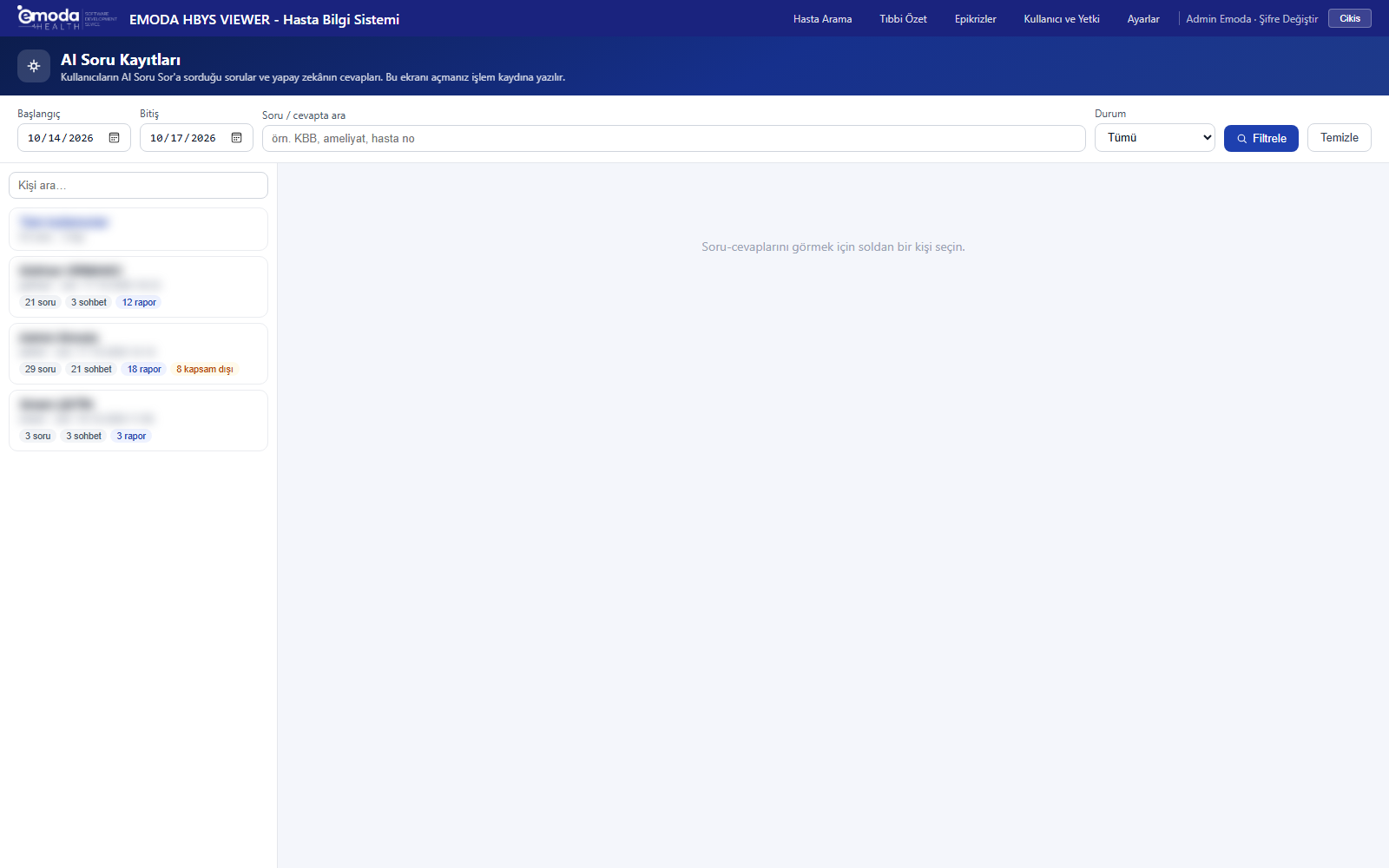
The AI Q&A panel answers questions about hospital data in natural language: "How many patients came today?", "Average revenue and cost of ENT external surgeons' operations in 2026", "Patients who came for a check-up and later received other services" return as tables within seconds; tables open full-screen and download as Excel or PDF. Patient identities are masked before reaching the AI, out-of-scope questions are refused, and every question and answer is logged per user on the AI Q&A Records screen.
Financial analysis tools present revenue, cost and profit per case (protocol); operation duration and length of stay; drug, consumable, operating-room and bed cost breakdowns by surgeon, specialty, month, in-house/external surgeon and procedure type. Operating-room capacity utilisation, monthly revenue distribution by source and service class, and tariff simulation for a target margin support management decisions with data.
Role- and permission-based access, institutional IP restriction with SMS verification for external logins, audit logs of who viewed which patient, and privacy-compliant masking are built in. Emoda Viewer is in live use at private hospitals and goes live without adding load to the existing HIS.
The Izmir History mobile application, implemented within the scope of the Izmir…
View
Starting in January 2023 under the HORIZON-MISS-2021-CANCER-02-03 call, LUCIA ha…
View
VILLAGE is to re-examine the post-pandemic teaching processes and needs of engin…
View