Horizon · Oncology
LUCIA: Understanding Lung Cancer Risk Factors and Their Impact
Emoda is the only participant from Türkiye in the Horizon Europe LUCIA project,…
View
Building healthcare technology since 2018 Schedule a demo with us
Last updated: · By Emoda Software
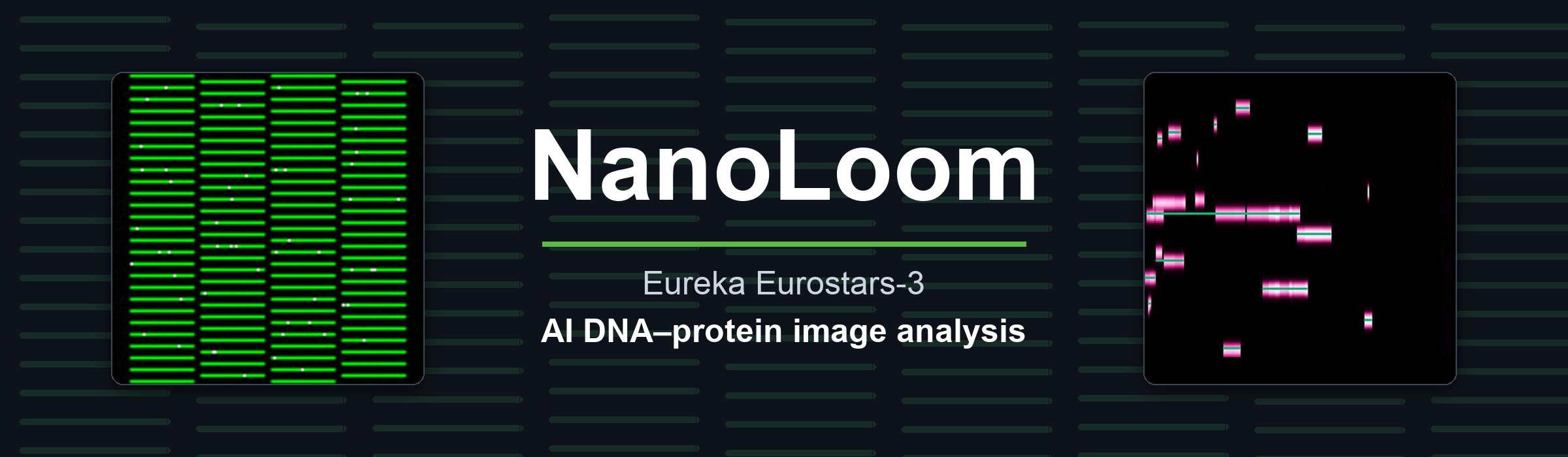
NanoLoom is an international R&D project supported by the Eureka Eurostars-3 programme and carried out with technology and research partners from Türkiye and Europe. It aims to study DNA–protein interactions at the single-molecule level and at high throughput for drug development. Its microfluidic chip aligns large numbers of DNA molecules within a single field of view, so that protein movement on DNA can be observed directly with fluorescence microscopy. Emoda Software leads the development of the AI-based image analysis package that extracts protein binding, movement and quantity from these images.
| Project name | NanoLoom |
|---|---|
| Programme | Eureka Eurostars-3 – Call 8 |
| Application number | 8981 |
| Start | 2026 |
| Field | Drug discovery, single-molecule biophysics, AI image analysis |
| Emoda's role | Development of the AI-based image and protein quantification analysis package (work package lead); data calibration; AI integration and validation; data management plan |
Single-molecule approaches have greatly advanced our understanding of DNA processes in academic research. However, traditional single-molecule methods either analyse one DNA molecule at a time or rely on indirect measurements, which has limited their use in drug development. NanoLoom aims to bridge academic molecular research and industrial drug development.
The NanoLoom chip combines the DNA Curtains approach developed at Columbia University with nanofabrication and microfluidics. Large numbers of surface-bound DNA molecules are arranged in a precise array, and protein behaviour on these molecules is imaged simultaneously and in real time with single-molecule fluorescence microscopy. This high-throughput single-molecule imaging format is known as the DNA curtains assay.
The project has three components:
Drug discovery needs faster, smarter and more reliable tools. Observing many protein–DNA interactions at once helps researchers understand mechanisms of action and drug efficacy earlier in the development pipeline. This is expected to speed up the identification of drug candidates and reduce experimental complexity and R&D costs. NanoLoom has broad application potential, including cancer research, infectious diseases, neurodegenerative disorders and new therapeutic areas.
Drawing on its experience in image analysis and data platforms, Emoda leads the development of the project's AI-based protein quantification analysis package:
In the first project period (January–June 2026), the first version of the analysis pipeline was developed on synthetic data. The pipeline has four stages:
| Stage | Steps |
|---|---|
| Input | Loading and calibrating the multi-channel microscope image (TIFF) |
| Regions of interest (ROI) | Detecting, validating and cropping individual DNA molecules |
| Detection | AI-based image processing to detect proteins, applied across the whole field of view |
| Tracking and analysis | Tracking proteins over time and generating kymographs |
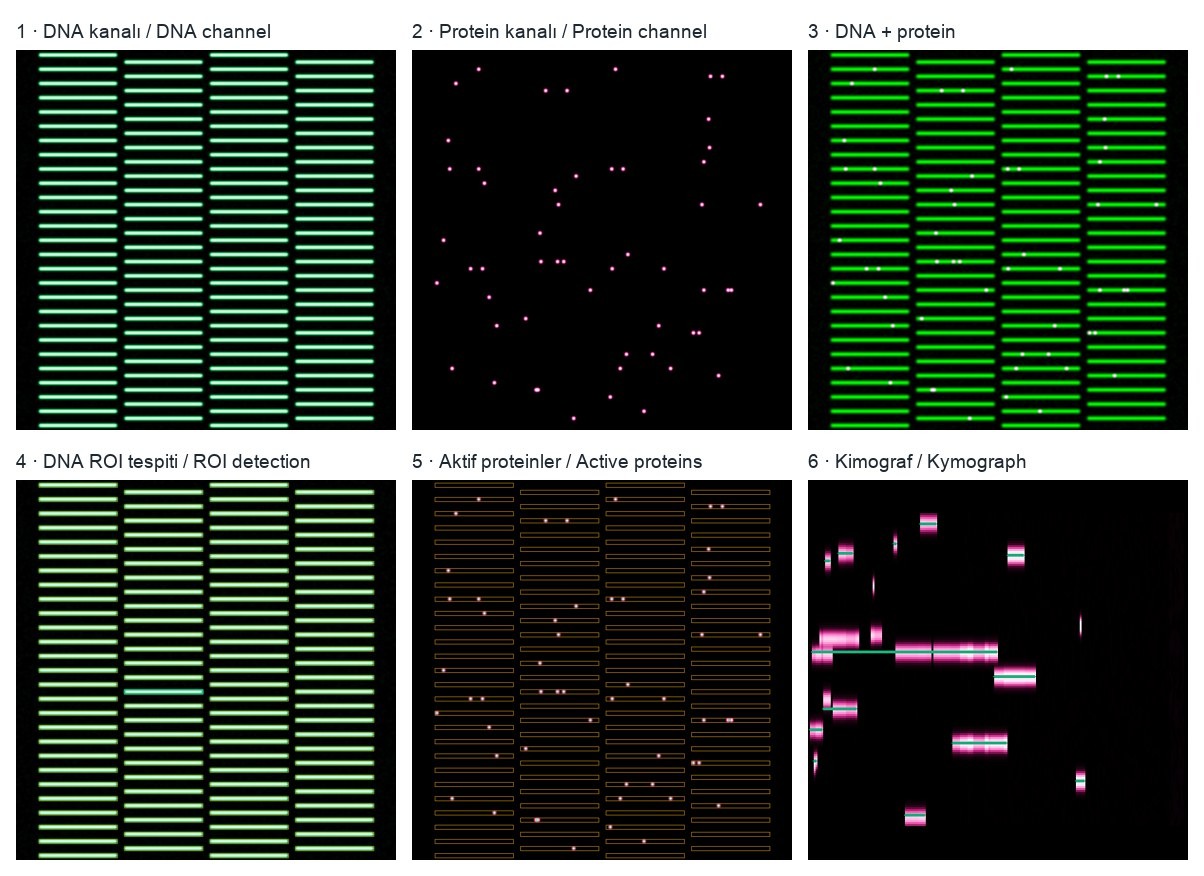
The goal is to cut manual analysis time from hours to minutes, detect subtle changes in DNA and protein behaviour, quantify binding events at high throughput and improve accuracy and reproducibility. Many labs still trace kymographs by hand in general-purpose tools such as ImageJ/Fiji; the NanoLoom pipeline aims to automate single-molecule tracking and kymograph analysis across large numbers of DNA molecules.
NanoLoom is designed for single-molecule biophysics labs studying DNA replication, transcription and repair proteins, for teams working on DNA-binding proteins such as transcription factors that are often considered undruggable, for researchers working on DNA–protein interactions, biotech innovators and pharmaceutical teams seeking deeper mechanistic insight, faster data interpretation and more reliable early-stage decisions in drug discovery.
Project kick-off announcement: NanoLoom Eurostars project news.
Co-funded by the European Union
This project has received funding from the Eurostars-3 Programme with co-funding from the European Union's Horizon Europe research and innovation programme. The views and information expressed are those of the author(s) only; neither the Eureka Secretariat nor the European Commission is responsible for them or for any use made of them.
NanoLoom is an international R&D project supported by the Eureka Eurostars-3 programme that aims to study DNA–protein interactions at the single-molecule level and at high throughput for drug development. A microfluidic chip aligns large numbers of DNA molecules in a single field of view, and protein movement on these molecules is imaged directly.
NanoLoom was approved in Call 8 of the Eureka Eurostars-3 programme under application number 8981. Eurostars-3 is co-funded by the European Union's Horizon Europe programme and the national funding bodies of participating countries.
Emoda leads the development of the project's AI-based image and protein quantification analysis package: data calibration, DNA region-of-interest (ROI) detection, protein detection and tracking, AI integration and validation, and the data management plan.
The pipeline has four stages: loading and calibrating the multi-channel microscope image, detecting DNA molecules as regions of interest (ROI), detecting proteins with AI-based image processing, and finally tracking proteins over time and visualising them with kymographs.
Researchers working on DNA–protein interactions, biotech companies and pharmaceutical teams that want faster and more reliable early-stage decisions in drug discovery.
The project aims to help understand drug mechanisms and efficacy earlier in areas including cancer research, infectious diseases, neurodegenerative disorders and new therapeutic areas.
DNA curtains is a high-throughput single-molecule imaging method in which large numbers of surface-tethered DNA molecules are aligned along nanofabricated barriers and imaged simultaneously by fluorescence microscopy. It was developed at Columbia University and has been used to study DNA replication, transcription and repair proteins. The NanoLoom chip builds on this approach.
Yes, that is the goal. NanoLoom's AI pipeline detects DNA molecules, finds the proteins on each molecule, tracks them over time and generates kymographs automatically, so kymographs no longer need to be traced by hand in general-purpose tools.
Emoda is the only participant from Türkiye in the Horizon Europe LUCIA project,…
View
In VILLAGE, funded by the Horizon Europe MSCA Staff Exchanges programme, Emoda d…
View
In the Horizon 2020 project PERSIST, Emoda led the clinical decision support sys…
View